

I. Grandma Heels: From “Outdated” to “Fashionable”
The term “grandma heels” initially sounded like a joke: low, blunt, and unassuming, seemingly belonging only to pharmacies and farmers’ markets of the 1950s. However, when people remove the prominent word “grandma” and look back at these shoes, they find that they have always lived on in another way—in the personal outfits of female celebrities, backstage at fashion shows, and in street photography, quietly playing the role of “comfort and elegance in one.”
These heels are usually between 3 and 5 centimeters high, with the center of gravity slightly behind the arch of the foot. Walking in them doesn’t result in a swaying motion, yet they can make the calves appear slightly longer. Unlike stilettos that create a “presence,” they subtly return attention to the wearer: a face, a coat, a skirt, rather than “those heels look painful.”
II. Diana’s “Invisible Shoes”
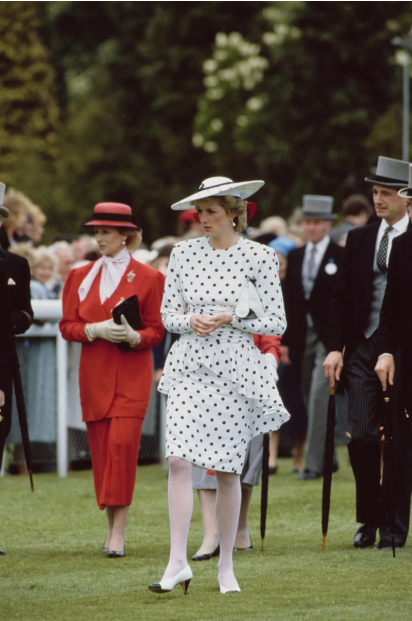
If we examine Diana’s public style, we’ll find that she rarely used shoes to “prove” her fashion sense. Instead, she preferred to use shoes to “support” her throughout the day. During her numerous official visits, engagements, ribbon-cutting ceremonies, and charity events, she frequently wore ankle boots or Mary Janes with a square mid-heel and slightly rounded toe. These weren’t “battle shoes” designed for the red carpet, but rather companions designed for the act of “walking” itself.
This type of shoe shares a certain spirit with what is now known as “grandma heels”: rounded toes, moderately high heels, soft lines, and an overall understated elegance. Unlike stilettos that emphasize “battle” and “sharpness,” it prioritizes “stability” and “composure.” In the royal environment of the 1980s, this aesthetic was a subtle form of rebellion: using a gentle appearance to resist the gaze that demanded “astonishment.”
III. Why are “Granny Heels” Trending Again?
In the years when social media first made “Granny Chic” a keyword, people were obsessed with loose-fitting knitwear, retro plaid skirts, and items that looked “like they came from grandma’s wardrobe.” “Granny heels,” however, seem like a natural extension of this aesthetic—not just retro for the sake of retro, but to solve a very real problem: how many steps can you actually take in heels all day?
When the office, meetings, commuting, and social events all require the same pair of shoes, young people are no longer willing to sacrifice comfort for a “sexy look.” Thus, “granny heels” have been revived, paired with suits, wide-leg pants, and even long skirts, creating an effortless sense of style that blends “appropriateness” and “ease.”
IV. How to Wear “Granny Heels” with Sophistication?
- Simple Design, Avoid Overly Flashy Styles
The beauty of granny heels lies in their “basic” feel. Pairing them with one or two well-designed pieces is sufficient, such as a pair of tailored trousers or a structured coat. The shoes themselves should remain clean, with minimal embellishment and more defined lines.
Keep Colors Unified and Subdued
Dark colors, nude tones, or earth tones often convey a more sophisticated look than overly bright metallic colors or prints. If you must use a bright color, consider using it as a small accent with variations in the shoe’s material, rather than having the entire shoe “steal the show.”
Emphasize Proportions: Narrower Top, Wider Bottom
These heels don’t have sharp lines, so you can balance them by pairing them with a fitted top and a looser bottom: for example, a fitted shirt with wide-leg trousers, or a short skirt with slightly longer socks, creating a visually light and airy feel.
V. Wearing Granny Heels: A Form of “Self-Restraint”
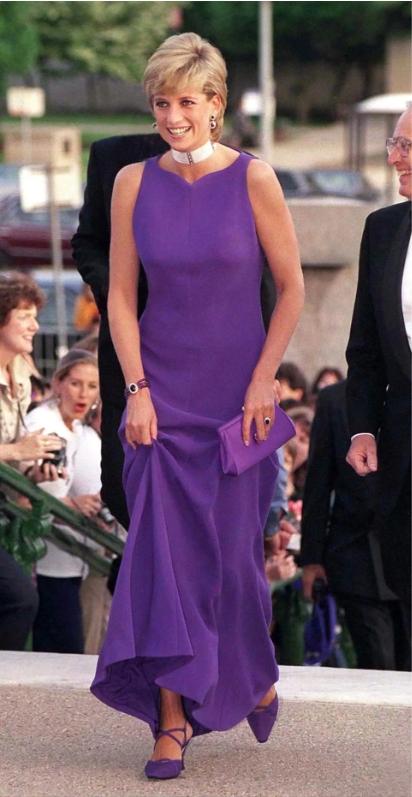
To some extent, wearing granny heels is like practicing a new form of “self-expression”: no longer using the height of the shoes to prove one’s presence, but rather using the quality of one’s gait to demonstrate a sense of propriety. It doesn’t emphasize “how tall I am,” but rather “how far I can go”; it doesn’t emphasize “how dazzling the shoes are,” but rather “whether the whole person looks natural.”
This may also be the subtext of Diana’s choice of shoes: in an environment where she was constantly under scrutiny, the shoes she chose were often not the most stunning, but the ones that could support her throughout the day. Today, when “granny heels” are discussed again, it’s less about following her style and more about us finally being willing to reinterpret the word “elegance” in a gentler, more self-consistent way.